

A young mother’s fragile life, a killer’s release, and a city that cannot forget.
The House on John Street
Sandusky, Ohio, lies on the edge of Lake Erie, where the wind rolls in with a dampness that sticks to skin and paint, where neighborhoods are small enough that everyone knows the comings and goings of strangers. On September 8, 2012, the people of John Street became witnesses to a silence so deep it turned the block into a graveyard.
Inside one of those modest homes, police discovered a crime that even seasoned officers could barely speak aloud. Heather Jackson, twenty-three years old, lay dead beneath a mattress. Her two children, Celina, just three, and Wayne, only eighteen months, had been placed in a closet. The coroner would later testify they all died the same way: ligature strangulation.
The murders were not just killings. They were erasures of a family, the wiping out of futures in a single night.

Heather’s World
Heather’s story was not unusual for young mothers in northern Ohio. She had grown up in the area, known to friends as tender, vulnerable, and sometimes too trusting. When the economy pressed and money ran short, she bent with it. At times, she lived out of her car, sending the children to relatives for shelter while she searched for stability. Eventually she moved into the John Street house, hoping a roof and four walls might mean a fresh start.
Friends remembered her with a mix of affection and worry. Amanda Thoren, an acquaintance, put it plainly: “She didn’t keep good company … She had a problem, but that never stopped her from being kind.”
That kindness was not selective. She opened her door to people who needed help, who had nowhere else to go, who asked for a couch or a cigarette or a moment of her time. And in the opening, sometimes danger slipped in.
The Wrong Man
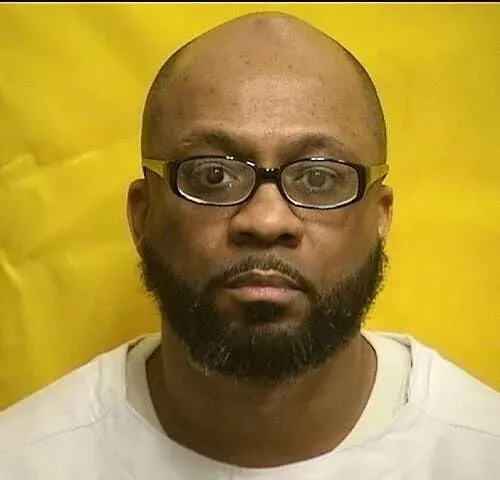
Danger came in the form of Curtis Clinton, a man with a heavy past and a darker future. Clinton was forty-one in the summer of 2012, and he had only recently stepped out of prison after serving thirteen years for the strangulation death of Misty Keckler, a seventeen-year-old girl in Wood County.
Police later said Clinton and Jackson had known each other for about five months. That is all the record gives: five months of some kind of connection. Friends guessed at what it meant. Some said she was romantically linked to him. Others believed he was simply part of the rough company she kept. In the rumor mills of Sandusky, the relationship was painted in every shade: an old friend, a dangerous lover, a hanger-on. The truth never fully came out.
But he was close enough to her life to step into her home, and close enough to her trust that she let him.
The Arrest
Two days after the discovery, Clinton turned up at Bellevue Hospital, a half-hour’s drive away. Police moved quickly. “Officers found 41-year-old Clinton at a hospital in nearby Bellevue,” Lt. John Orzech told reporters. He refused to explain what Clinton was doing there, leaving the reason a mystery that has never been clarified.
The arrest shocked and angered a city that had already seen his name before. People remembered the old case, the strangulation in 1999, and asked why a man with that past had been released at all.
The Case Against Him
In the courthouse, the State built a picture that was hard to look at. The jury heard about DNA evidence, about ligature marks, about forensic signs of sexual assault against Heather’s three-year-old daughter. They heard about a separate attack, one week earlier, when Clinton raped a seventeen-year-old girl identified in court as E.S. Those charges were tried together with the homicides, an unusual move that later became a central appellate fight.
The theme was clear: Clinton was a predator. He strangled before, he strangled again. He preyed on the vulnerable.
The Defense and the Denials
Clinton’s lawyers tried to keep the cases separate, tried to block the jury from hearing about his past conviction. They argued the State was piling prejudice on top of fact, creating a monster out of history instead of letting the evidence of the present stand on its own.
Clinton himself denied guilt. At sentencing, facing the victims’ families, he said, “I’m sorry for what happened, but I didn’t do it.” The courtroom grew heavy in the silence that followed.
The Verdict
On November 4, 2013, the jury returned guilty on all major counts. On November 12, they recommended the death penalty. Judge Tygh M. Tone followed through, sentencing Clinton to die for the murders of Heather and her children.
The sentence did not bring simple relief. Some of Heather’s own relatives had pleaded with prosecutors not to pursue death. They wanted life without parole, an end without spectacle. Erie County Prosecutor Kevin Baxter admitted he weighed their request: “We considered it, but the facts warranted a capital case.”
The Appeals
The case wound through the courts for years. In 2018, the Ohio Supreme Court affirmed the convictions and the death sentences, rejecting arguments about the joinder of charges and the admission of Clinton’s past crime. The justices noted that even if some evidence had been admitted improperly, the rest was strong enough to leave the verdict untouched.
In 2024, the Sixth District Court of Appeals turned aside Clinton’s last round of claims, including his theory that alternate perpetrators might be responsible.
Today, Clinton remains on Ohio’s death row. Executions are effectively paused in the state, but his sentence still stands, a judgment waiting.
The Relationship Question
For all the court records and forensic reports, the question of Heather’s relationship with Clinton remains unsettled.
- Police said they were “acquainted.”
- Friends said she kept troubled company.
- Rumors spoke of jealousy, of drugs, of a romance gone sour.
- The prosecution said he was a predator exploiting access.
- The defense said he was innocent, a man trapped by prejudice.
The record is thin, the whispers thick. What is certain is that whatever he was to her — friend, lover, or shadow — he was the last man she ever saw.
The City’s Memory
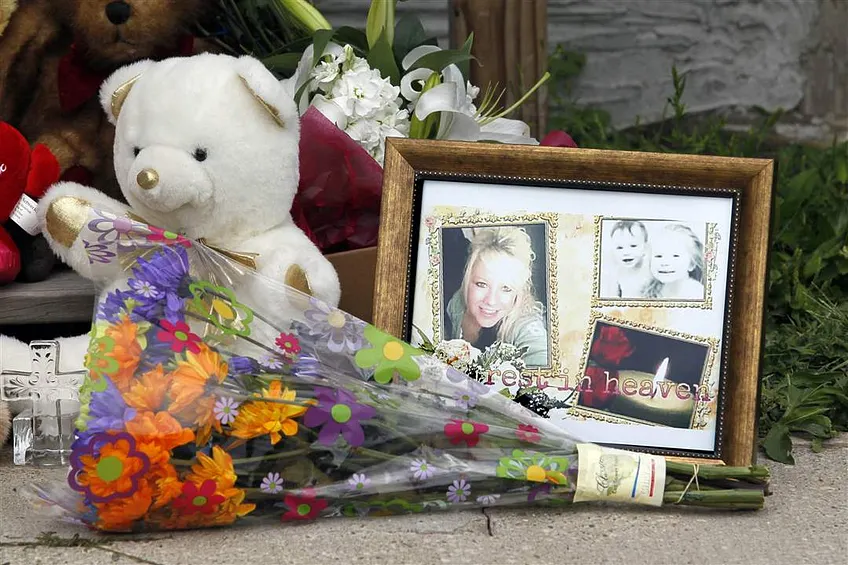
In Sandusky, the murders did not fade. John Street still carries the story like a scar. Neighbors recall the yellow police tape, the officers moving in and out of the small house, the hushed voices at the edge of the yard.
They also remember Heather — her kindness, her mistakes, her children’s laughter. The memory of Clinton is darker: a man who strangled once, served time, and was let loose to strangle again.
The Lesson
The lesson depends on who you ask. Some say it is about a justice system too quick to release men with blood on their hands. Others say it is about kindness misused, about a young woman who trusted the wrong man. Still others believe it is about how communities fail the vulnerable, leaving women like Heather to fend for themselves until danger overtakes them.
The Human Weight
Heather Jackson was twenty-three. She had no easy road, but she loved her children. Celina and Wayne were toddlers, still forming words, still learning how to play. Their futures were erased in an instant.
The trial, the appeals, the legal wrangling — they are the system’s way of grappling with the horror. But the human weight remains in the quiet street, in the memory of friends who still wonder why she opened the door to Curtis Clinton, and why the system opened the door to him at all.
Coda
And here we are, still gnawing the bones of John Street thirteen years later. A young mother, two kids, snuffed out like candles in the night, while the bureaucrats shrugged and said, “We considered life, but the facts warranted death.” They considered. They deliberated. They wrote their memos and packed up for the weekend while a man who strangled once was let loose to strangle again.
This is the carnival of American justice: a parole board signing papers, a prosecutor polishing his capital case, a defense attorney screaming into the wind, and a jury staring at crime-scene photos until their guts turn sour. Meanwhile, the rest of us walk past John Street, past the house that still hums with the ghost of that night, and we wonder how many Heather Jacksons are out there — how many kind souls are trusting the wrong man right now, this very minute.
The system doesn’t fix that. It doesn’t even try. It waits until the bodies are cold and the cameras roll, then it parades the monster through the courthouse like a sideshow attraction. And when it’s all over, when the headlines fade, it leaves the rest of us with the same sick question burning in our throats: how the hell did we let this happen again?
Telling their story means sifting through court files, appeals, and even the whispers on John Street — not to sensationalize, but to preserve the truth. That’s what The Independent Defender is here for: to make sure our community doesn’t forget, and that power is held to account.
If you believe stories like Heather’s deserve to be told with care, depth, and persistence, join us. Subscribe today and help keep memory and truth alive.
Reader Discussion