From floods to factory closures, from Charlie Kirk’s killing to school shootings, we know storms. But resilience lives here still — in neighbors, in small mercies, and in the sunlight we share
NORTHERN OHIO — The headlines hit like hail on tin. President Trump at his rallies, splitting the country in half with every word. Charlie Kirk on stage, shot dead with his last breath tangled in the very talk of guns he once used to mock. Another school shooting in another town whose name will be forgotten by the world but never by the parents.
Mothers send their children to class and sit all day with the worry eating at them. Fathers stand in kitchens with the bills stacked like bricks and wonder what has happened to the country they thought they knew.
But this land — the lake wind, the flat fields, the little towns stitched together by roads and memory — has seen worse storms and come through them. That is the truth.
Floods and Fires
In the spring of 1973, Lake Erie swelled and rolled right into Sandusky. Market Street became a river and boats were tied to lampposts like it was always meant to be that way. Shopkeepers stood in doorways and shook their heads. The water went out again, and people with hammers and buckets followed. By summer the boards were patched, and the work was done.
In Fitchville, in 1963, the Golden Age Nursing Home caught fire and sixty-three souls were lost. The grief was too heavy for words. But the laws bent, codes were rewritten, and other lives were spared in years that followed. Out of fire came a kind of resolve.
Work and Its Leaving
The factories gave the people here their rhythm: whistles, shifts, paydays. Then one by one the doors closed. Steel in Lorain, furniture in Norwalk, auto parts in Sandusky. Families sat at tables and asked what now?
But they did not leave. They found other ways. Cedar Point grew louder. Tourism pulled in strangers. Hospitals, schools, and little shops filled some of the silence. The work changed its name, but the people stayed put.
Winters and Pandemics
The Blizzard of ’78 swallowed cars and buried houses to the roof. The wind howled across the lake like a wild animal. For three days, nothing moved. But neighbors did what they had always done: they dug each other out, they carried wood to the old, they knocked on doors to make sure no one had been forgotten.
The pandemic brought a quieter storm. Streets empty, churches closed, funerals on screens. But food banks filled cars with bread and milk, teachers taught from kitchen tables, families waved to each other through glass. Life bent, but it did not break.
Violence in the Present Tense
Now in 2025, the headlines are blood-red. President Trump commands love and rage in equal measure. Charlie Kirk’s death pulled the country up short. Another school shooting — another prayer vigil, another town forever changed. The drumbeat does not stop.
And yet:
- A child at St. Jude rings the bell, and the cancer is gone. His parents weep, and for once they weep with joy.
- Two teenagers kiss for the first time on Jackson Street Pier with the lake wind in their hair, the world suddenly brighter than it was before.
- A grandfather holds his grandson and feels the years slide together, tears running down the furrows of his face.
- A father tosses a baseball to his boy, not for glory, not for stadium lights, but just for the smile when the ball lands in the glove.
These things do not make the crawl across the bottom of a screen. But they are real. They matter more than the rot.
Gonzo Interlude: The Door Kicker’s Sun
I promised you I would hunt down every rotten thing in this town and beyond. That I would kick down doors, dig through files, flip rocks and let the sun burn the filth hiding underneath. That is the job, and I will keep at it until my hands split.
But even the one who crawls through the dark has to look up now and then. Even the door kicker needs the sun on his face to remember why he went in there in the first place. Because the world is not just rot. It is also the cure, the laughter, the kiss on the pier, the boy who beats cancer, the old man holding new life.
Even the strongest have to share the sun. And I’m telling you — we share it together.
The Quiet Proofs
Resilience is not written in slogans. It’s in the hands and hearts of people here in Norwalk and Sandusky:
- Volunteers with Answering The Call Together in Norwalk, loading supplies into trucks and showing up when disaster strikes.
- The Norwalk Salvation Army Corps, feeding the hungry, guiding the young, holding steady for those with nothing left.
- The people who will not let the Sandusky State Theatre die after the 2020 windstorm ripped it apart, working until its lights shine again on Columbus Avenue.
- The Sandusky Children’s Museum, where parents and teachers build wonder out of simple tools, showing kids a future bigger than they imagined.
- Neighbors planting flowers downtown, or raising money for schools, or clearing the snow off an old man’s sidewalk.
Small mercies. Ordinary work. Proof that this place still belongs to the people.
The Lesson We Cannot Forget
To reassure is not to lie. It is not to say all is well. It is to say: yes, the country is hurting, yes, violence stalks us, yes, despair is real — but so is endurance.
Floods go out. Fires burn down. Factories close and new doors open. Winters thaw. Pandemics end. Even bullets cannot erase the love between a grandfather and his grandson, or the laughter of children in a museum, or the light that still comes over the lake in the morning.
Northern Ohio has endured every trial laid against it. America too, though battered, still carries that stubbornness in its bones.
So breathe. Remember the storms passed. Remember the neighbor with the shovel, the teacher with the chalk, the farmer with the seed. Remember the child at St. Jude, the teenagers on the pier, the grandfather’s tears, the father with the baseball.
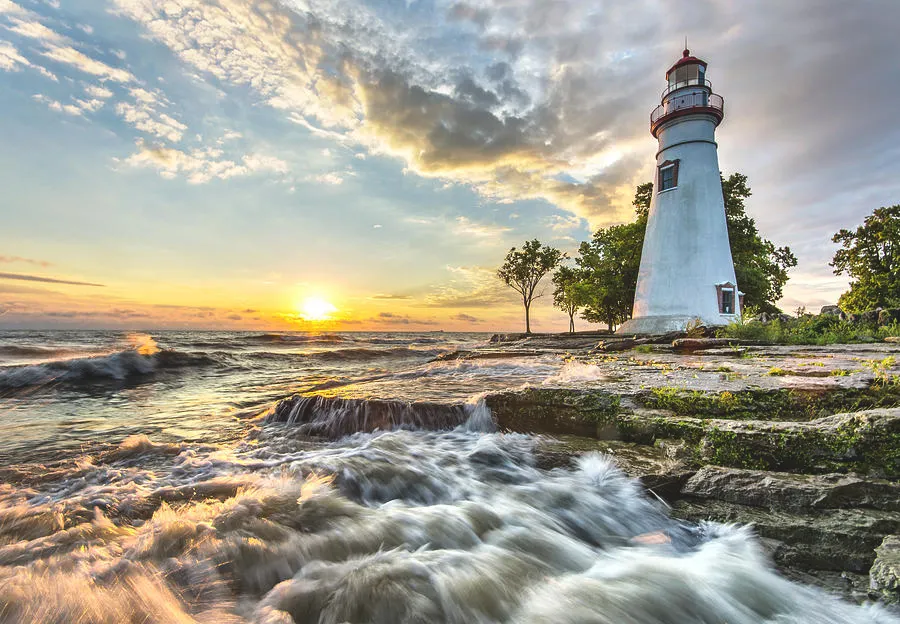
We are bruised, but not broken. Tomorrow the lake will still catch the sunrise. And we will still be here to see it.
Reader Discussion